
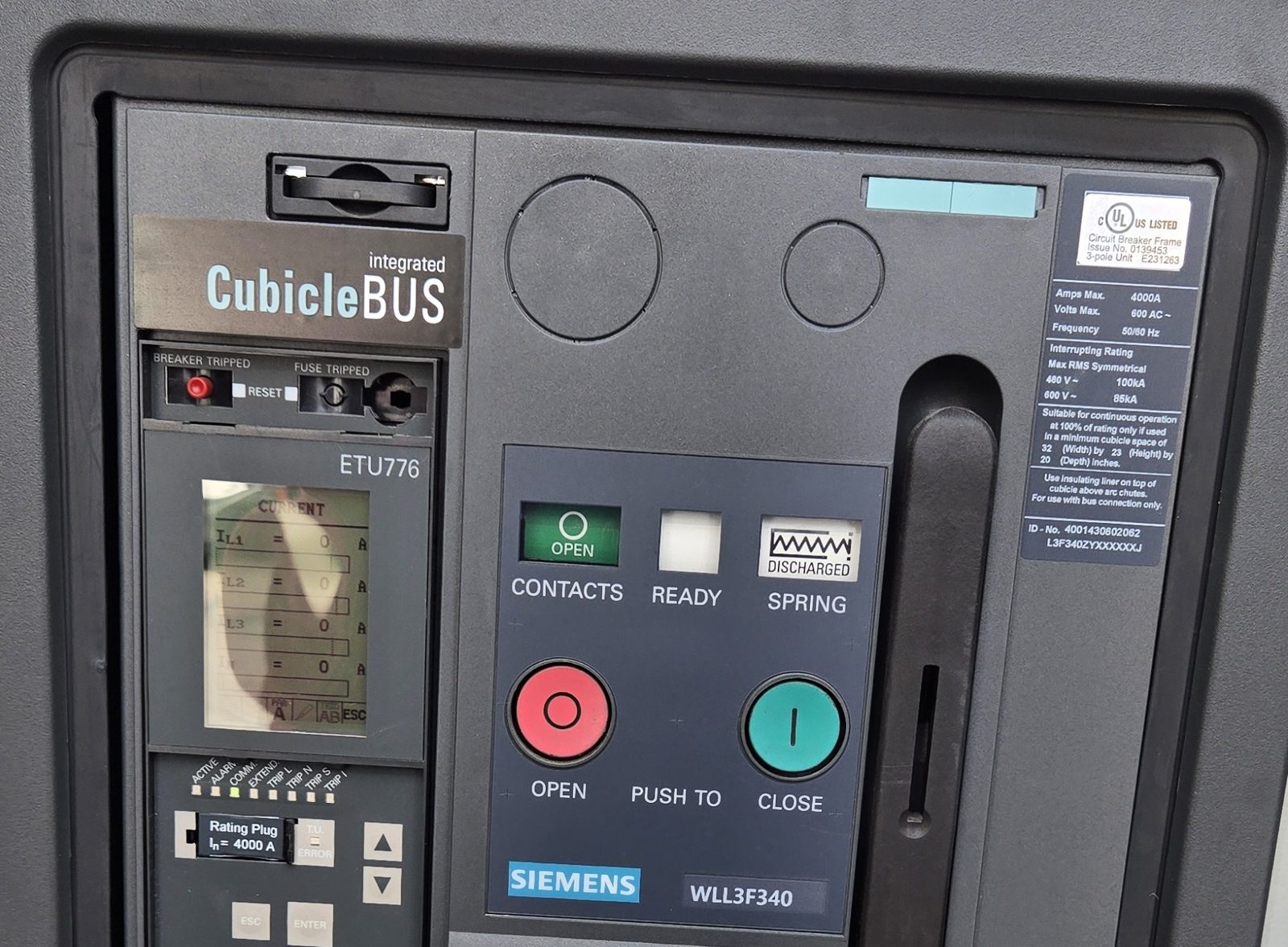
Why Test Your Breakers?
Breakers can sit closed and untouched for years. Dust, corrosion, dried lubricant, and weakened springs can keep a breaker from tripping when a fault occurs — turning a minor fault into major equipment damage or an arc flash incident. NETA recommends periodic maintenance testing to catch these problems before they matter, and documented test records support your facility's preventive maintenance program and insurance requirements.
Primary Injection Testing
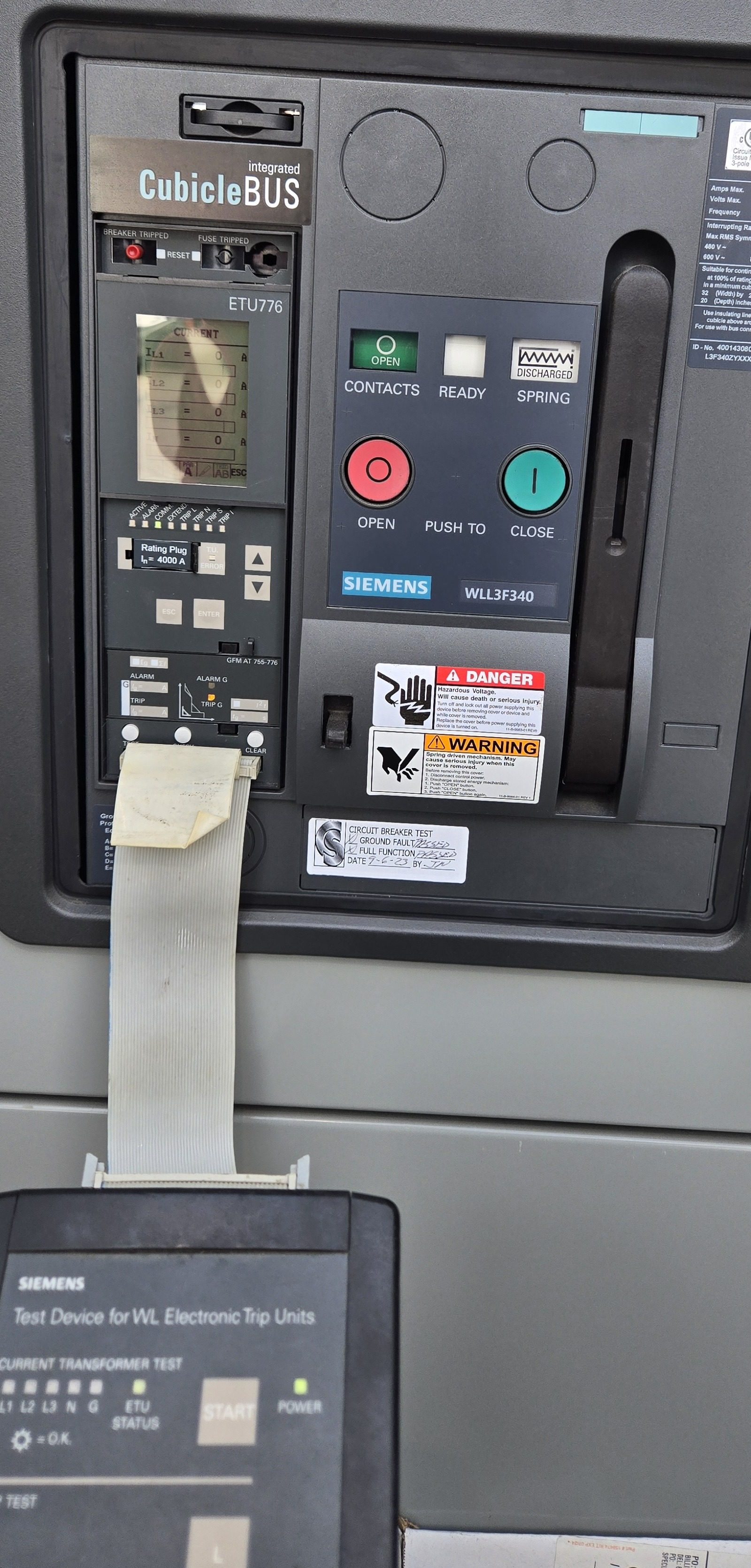
Primary injection testing passes actual current through the breaker to verify that it trips at its rated settings. It is the definitive functional test of a breaker's overcurrent protection, covering:
- Long-time, short-time, instantaneous, and ground-fault trip functions
- Verification of trip unit settings against the coordination study
- Mechanical operation and timing
What's Included
- Testing per NETA Maintenance Testing Specifications (MTS)
- Insulation resistance, contact resistance, and mechanical operation checks as applicable
- Documented test results for every breaker, with deficiencies clearly flagged
- Recommendations for repair or replacement where needed
Breaker Shutdowns
Planned shutdowns are the safe window to test, maintain, and exercise your breakers. We work with your facility team to plan the shutdown, perform testing while equipment is de-energized, and get you back online on schedule — with documentation for your maintenance records. Proper planning keeps the outage window short and makes sure every breaker that needs attention gets it.
Reg-4 & ATS Testing
We perform Reg-4 testing and automatic transfer switch (ATS) testing to verify that emergency and standby systems transfer load as designed. ATS testing covers transfer timing, voltage and frequency sensing, and retransfer to normal power.
Schedule a Free Consultation
Planning a shutdown or need a breaker testing program for your facility? Talk to us first.