
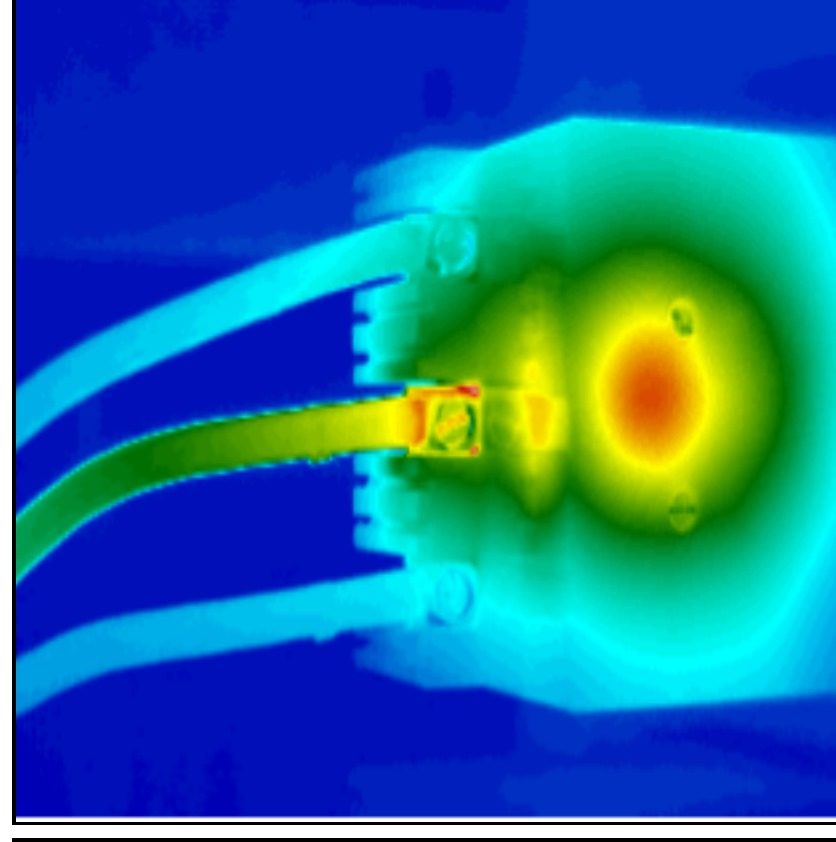
Find the Failure Before It Finds You
A loose lug, an overloaded breaker, an unbalanced load, a connection going bad — all of them get hot before they fail. GFI Testing performs infrared thermographic inspections of energized electrical equipment: switchgear, switchboards, panelboards, motor control centers, bus duct, disconnects, and transformers. Scanning is non-invasive and done under normal load — no shutdown, no downtime.
What a Scan Finds
- Loose and deteriorated connections — the number one source of electrical hot spots
- Overloaded circuits and breakers running hot under load
- Unbalanced loads between phases
- Failing breakers and switches with hot poles or contact heating
- Overheating motors, bearings, and terminations
The Report Is the Product
Anyone can point a thermal camera. What you do with the findings is what matters — and it's where our reports stand apart. Every GFI infrared inspection produces a complete thermographic report:
- Priority Maintenance Checklist — every problem found, sorted by repair priority, so your team knows what to fix first.
- One page per problem — the thermal image and a matching visible-light photo side by side, with component temperatures, true RMS amp readings, and the equipment's nameplate details on the same page.
- Severity ratings you can act on — each problem is rated (Minor, Important, Serious, Critical) from the measured temperature rise, with the recommended action spelled out for that rating.
- Complete inventory — every item scanned is listed with its test status, including anything that couldn't be opened or tested, so the report covers the whole system — not just the problems.
- Problem memory, year over year — we track your problems from one inspection to the next. If the same connection runs hot again next year, the report says so — and shows you the trend. Repeat problems stop being surprises.
Why Facilities Scan Every Year
- NFPA 70B — the 2023 standard requires a documented Electrical Maintenance Program, and recurring infrared inspection of electrical equipment is part of it. An annual scan keeps your program current.
- Insurance — many carriers require or reward documented annual thermographic inspections of electrical systems.
- Failure prevention — a planned repair on a Tuesday costs a fraction of an emergency outage on a production day.
What's Included
- Pre-scan coordination — we schedule around your operations, because scans are most valuable under normal working load.
- On-site scanning — a qualified technician thermographically inspects your equipment and documents every problem with paired thermal and visible images and load readings.
- The report — the full thermographic report described above, delivered ready to hand to your maintenance team, your insurer, or your safety auditor.
- Repair verification — after corrections are made, a follow-up scan confirms the hot spots are actually gone.
Schedule a Free Consultation
Due for an annual scan, or never had one done? We'll scope your facility and show you a sample of the report you'll receive.